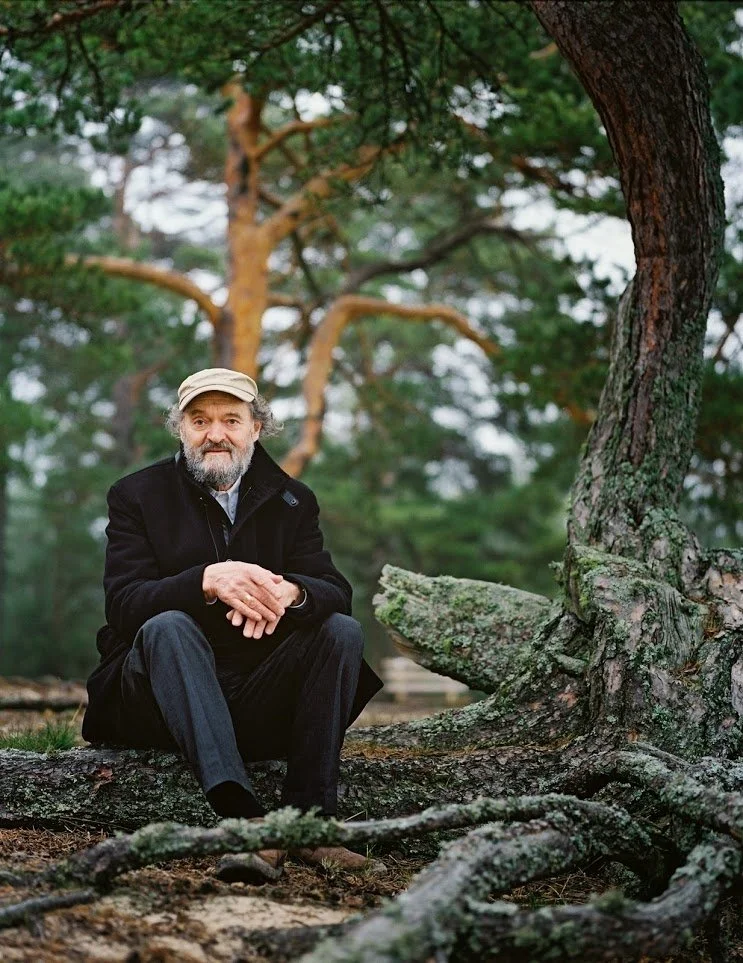
Arvo Pärt at 90
August 29, 7:30pm
August 30, 2:00pm
St. Philip Presbyterian
4807 San Felipe Street, 77056
$45 general admission
$25 educator tickets
$20 student tickets

About
Join Cor Mundi Chamber Choir and Kinetic Ensemble in celebrating the 90th birthday of Arvo Pärt, one of the most performed composers of our time. This special jubilee program brings together some of Pärt’s most iconic works for choir and string orchestra, including Fratres, Tabula Rasa, Bogoróditse Djévo, The Beatitudes, and Berliner Messe. Characterized by extraordinary beauty, spiritual depth, and radiant simplicity, Pärt’s music has captivated listeners around the world for decades. Featuring acclaimed organist Bryan Anderson, this anniversary celebration offers a rare opportunity to experience the remarkable breadth of Pärt’s musical voice in a single concert.
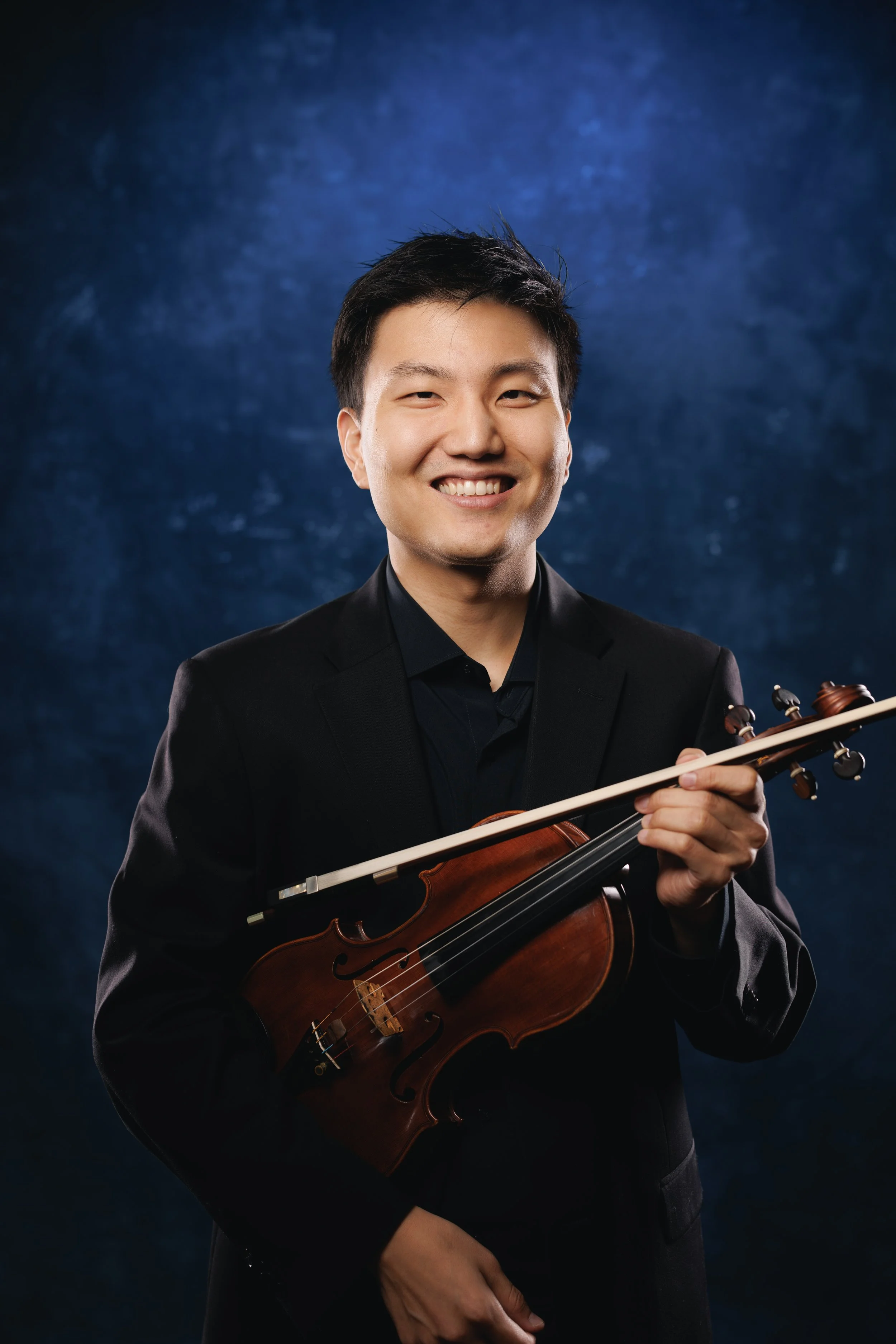
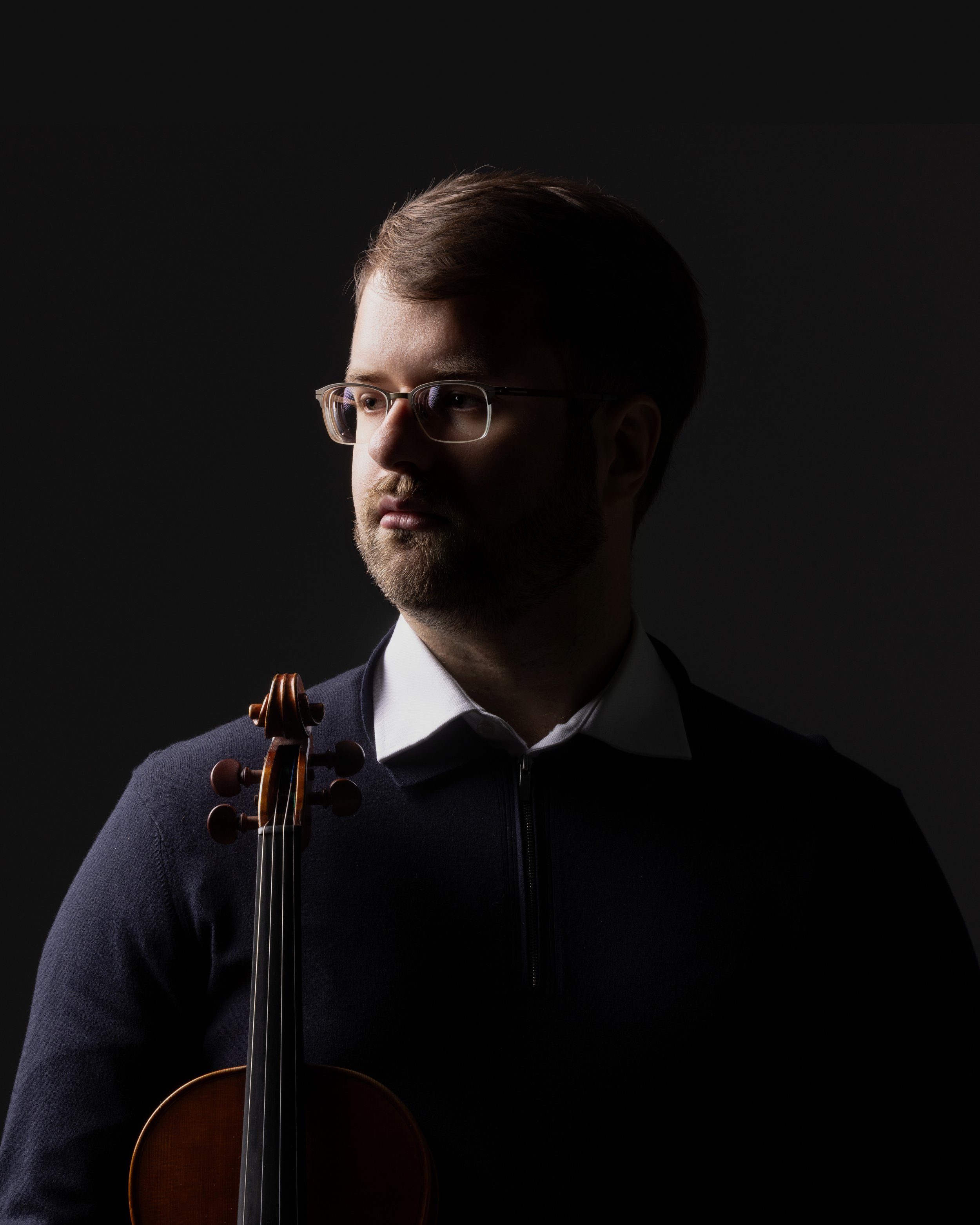
— curated by Natalie Lin Douglas, violin
Program
Arvo Pärt: Fratres (1977)
featuring Natalie Lin Douglas, solo violin
Pärt: Summa for string quartet (1977)
Pärt: Tabula Rasa (1977)
featuring Sam Park & Jacob Schafer, solo violins
Ludus
Pärt: Bogoróditse Djévo for choir (1990)
Pärt: The Beatitudes for choir and organ (1990)
Pärt: Berliner Messe for choir and strings (1990)
Kyrie
Gloria
Erster Alleluiavers
Veni Sancte Spiritus
Credo
Sanctus
Agnus Dei
Featured Composer
Arvo Pärt is one of those composers in the world, whose creative output has significantly changed the way we understand the nature of music. In 1976, he created a unique musical language called tintinnabuli, that has reached a vast audience of various listeners and that has defined his work right up to today. There is no compositional school that follows Pärt, nor does he teach, nevertheless, a large part of the contemporary music has been influenced by his tintinnabuli compositions.
In Pärt’s creative biography, the years 1968–1976 mark his period of crisis – the final renunciation of the modernist techniques and means of expression used so far, searches for personal musical language and as a result, a radical change in the author’s style. “I didn’t know at the time that was I going to be able to compose at all in the future. Those years of study were no conscious break, but life and death agonising inner conflict. I had lost my inner compass and I didn’t know anymore, what an interval or a key meant,” Pärt recalled many years later.
In 1976, Pärt emerged with a new and highly original musical language, which he called tintinnabuli (from tintinnabulum – Latin for ’little bell’). The new style first appears in a short piece for piano, Für Alina, followed soon by works like Cantus in Memory of Benjamin Britten (1977), Fratres (1977), Tabula rasa (1977) and Spiegel im Spiegel (1978). Pärt has now been composing in his tintinnabuli-style for over 40 years, and it has proven to be a rich and inexhaustible creative source.
Tintinnabuli music can be defined as a distinct technique, which in essence unites two monodic lines of structure – melody and triad – into one, inseparable ensemble. It creates an original duality of voices, the course and inner logic of which are defined by strict, even complicated mathematical formulas. Through that duality of voices Pärt has given a new meaning to the horizontal and vertical axis of music, and broadened our perception of tonal and modal music in its widest sense.
The first tintinnabuli works were composed and premiered in Tallinn, Estonia – the USSR at that time. As did the avant-garde spirit of Pärt’s early works, so led the religious aspect of his tintinnabuli music to more and more controversial reviews and confrontations with Soviet officials. In January 1980, Arvo Pärt was forced to emigrate to Vienna with his wife Nora and two sons. A year later the family moved on a DAAD scholarship to Berlin, where they lived for almost 30 years.
As an active and productive composer, Pärt has continued composing since without any longer breaks. Vocal compositions, often based on liturgical texts or other Christian prayers, comprise a large part of his oeuvre. Among them there are many large-scale compositions for choir and orchestra, such as Passio (1982), Stabat Mater (1985), Te Deum (1985), Miserere (1989/1992), Berliner Messe (1990/2002), Litany (1994/1996), Kanon pokajanen (1997), Como cierva sedienta (1998/2002) and In principio (2003), as well as choral pieces with organ accompaniment or a cappella.
After Estonia regained its independence in 1991, the connections between the Pärt family and Estonia as well as its music scene were restored. In the 1990s, his works were often performed as part of Estonian concert programmes, and the Tallinn Chamber Orchestra and Estonian Philharmonic Chamber Choir under the baton of Tõnu Kaljuste also released their first recordings of Pärt’s music under ECM.
Arvo Pärt has lived permanently in Estonia since 2010. The same year, on the initiative of Arvo and Nora Pärt, the Arvo Pärt Centre was established in Laulasmaa. In collaboration with the composer himself and his family, the APC aims to create and maintain the personal archive of the composer.